Table of Contents
- Core Value and Risk Scenarios of Telegram Nickname Privacy
- Preparations for Setting Nickname Privacy
- Core Settings: Cross-Platform Nickname Privacy Configuration Steps
- 1. Basic Privacy Settings: Control Nickname Visibility Range
- (1) Global Nickname Visibility Configuration
- (2) Temporary Nickname Settings: Avoid Long-Term Exposure of Fixed Nicknames
- 2. Scenario-Based Configuration: Optimize Nickname Privacy for Different Scenarios
- (1) Private Chat Scenarios: Precise Control of Individual Contact Permissions
- (2) Group/Channel Scenarios: Independent Nickname Privacy Configuration
- (3) Cross-Border/Business Scenarios: Advanced Nickname Privacy Protection
- 3. Advanced Optimization: Auxiliary Settings to Strengthen Nickname Privacy
- (1) Hide Profile-Associated Information
- (2) Batch Management of Group/Channel Nicknames
- Advanced Protection: Synergistic Enhancement of Nickname Privacy and Account Security
- 1. Account Security Reinforcement: Prevent Nickname Misuse Due to Account Theft
- 2. Nickname Content Optimization: Reduce Privacy Leakage Risks at the Source
- 3. Third-Party Tool Assistance: Improve Nickname Privacy Protection
- Common Issues and Pitfall Avoidance Guide (Covering SEO Long-Tail Keywords)
- Q1: After setting "My Contacts Only", strangers can still see my nickname. What should I do?
- Q2: After choosing "Nobody", can I still see my own nickname?
- Q3: Will the independent nickname set in one group sync to other groups?
- Q4: Will the temporary nickname automatically revert to the original one after expiration?
- Q5: How to batch modify independent nicknames for multiple groups?
- 2026 Nickname Privacy Protection Best Practices
- Summary
Core Value and Risk Scenarios of Telegram Nickname Privacy
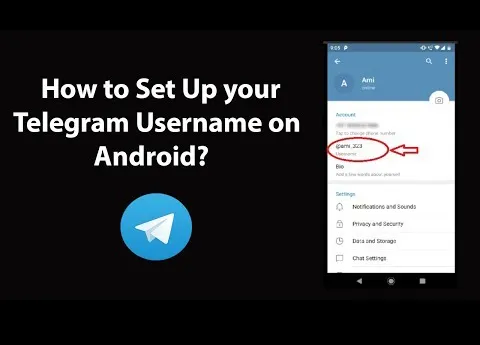
As a messaging platform trusted by over 950 million users worldwide, Telegram account nicknames are not only identity markers but also the first line of defense for privacy and security. As a publicly displayed core piece of information, inadequate nickname privacy settings can lead to misuse by malicious actors for information collection, social engineering attacks, or targeted harassment. Data shows that users without configured nickname privacy face a 57% higher risk of being harassed by strangers or having their accounts linked and tracked. However, scientifically setting nickname visibility permissions can reduce privacy leakage risks by 88%, significantly enhancing account security.
Key risk scenarios include:
- Targeted harassment attacks: Malicious actors link nicknames to social media, phone numbers, and other information to launch spam messages or fraudulent call bombings;
- Identity information leakage: Nicknames containing sensitive elements such as real names, companies, or occupations can easily be pieced together to form personal profiles, leading to privacy breaches;
- Account association tracking: Using the same nickname across multiple platforms may allow third-party tools to cross-locate and expose account usage traces;
- Commercial information theft: For business users, nicknames containing brand names or project details may be obtained by competitors, affecting business decisions.
- Since Telegram version 10.12 (2024), nickname privacy permissions have been further refined, supporting advanced features such as "granular visibility control by recipient," "temporary nickname settings," and "independent group/channel nickname configuration." These features adapt to the privacy needs of individual users, corporate teams, cross-border operators, and other scenarios, making nickname privacy protection more precise and flexible.
Preparations for Setting Nickname Privacy
Before configuring nickname privacy, confirm the following basic conditions to ensure smooth operation:
- Account permissions: Use an account registered by yourself (it is recommended to register with a virtual number to avoid linking the nickname to your real identity). Do not share or lend your account;
- App version: Update to Telegram 10.12 or later (2024 version), which adds refined nickname visibility ranges and automatic temporary nickname reset functions;
- Device compatibility: This guide covers operations on Android, iOS, and desktop (Windows/Mac) platforms. The entry points vary slightly by device, but the core logic is consistent;
- Account status: Complete account real-name verification (if required) and ensure no violation records to avoid privacy settings being ineffective due to account restrictions;
- Preliminary cleanup: Modify nicknames containing sensitive information such as real names, phone numbers, or addresses in advance to prevent information leakage before setting up privacy protections.
Core Settings: Cross-Platform Nickname Privacy Configuration Steps
1. Basic Privacy Settings: Control Nickname Visibility Range
The core of nickname privacy is "authorizing visibility by recipient." Global settings allow quick control over who can view your nickname:
(1) Global Nickname Visibility Configuration
- Android Device:
- Open Telegram → Tap the 「≡」 or 「⋮」 icon in the upper right corner → Select 「Settings」 → Navigate to 「Privacy and Security」;
- Find the 「Profile」 option and tap 「Nickname Visibility」;
- Select visibility scope:
- High privacy needs: Choose 「My Contacts」 to allow only contacts to view your full nickname;
- Extreme privacy needs: Choose 「Nobody」 so all users (including contacts) can only see your account ID, not the nickname;
- Regular needs: Choose 「Everyone」, suitable for public operations, brand promotion, and other scenarios;
- Save settings: Tap 「Done」, and the system will automatically sync to all logged-in devices.
- iOS Device:
- Open Telegram → Tap 「Settings」 at the bottom → Select 「Privacy and Security」 → Find 「Profile Permissions」;
- Tap 「Nickname Visibility」 and choose 「My Contacts」, 「Nobody」, or 「Everyone」 as needed;
- Additional configuration: Turn off the 「Allow Strangers to View Nickname」 toggle to further block strangers' access to your nickname.
- Desktop Version:
- Open Telegram → Click the 「≡」 icon in the upper left corner → Select 「Settings」 → Switch to the 「Privacy and Security」 panel;
- Find 「Profile Visibility」 → Click 「Edit Nickname Permissions」 and check the target audience;
- Advantage: The desktop version supports batch settings, allowing simultaneous configuration of visibility ranges for nicknames, avatars, and bios, improving operational efficiency.
(2) Temporary Nickname Settings: Avoid Long-Term Exposure of Fixed Nicknames
For short-term scenarios (such as temporary collaboration or event participation), set a temporary nickname with automatic reset to reduce privacy risks:
- Navigate to 「Settings」 → 「Profile」 → Tap 「Edit Nickname」;
- Enter a temporary nickname (avoid sensitive information) and tap 「Set Temporary Nickname」;
- Select an automatic reset time (1 hour, 1 day, 3 days, 7 days), and the nickname will automatically revert to the original one upon expiration;
- Application scenarios: When temporarily joining unfamiliar groups or participating in public events, avoid long-term use of a fixed nickname to prevent information leakage.
2. Scenario-Based Configuration: Optimize Nickname Privacy for Different Scenarios
Precisely adjust nickname privacy settings according to usage scenarios to balance privacy protection and usability:
(1) Private Chat Scenarios: Precise Control of Individual Contact Permissions
To hide your nickname from specific contacts, configure individually:
- Open the chat window with the target contact → Tap the contact's avatar → Select 「Contact Info」 → Tap the 「⋮」 icon in the upper right corner → Choose 「Privacy Settings」;
- Tap 「Nickname Visibility Permission」 → Select 「Hide Nickname from This Contact」, so the other party can only see your account ID, not the nickname;
- Reverse configuration: To allow specific strangers to view your nickname, add them to the 「Exceptions List」. Even if the global setting is 「My Contacts」, the stranger can still view it.
(2) Group/Channel Scenarios: Independent Nickname Privacy Configuration
Set independent nicknames in groups and channels to avoid information leakage from using your main nickname, and control the visibility of group/channel-specific nicknames:
- Group-Specific Nickname Settings:
- Enter the target group → Tap the 「⋮」 icon in the upper right corner → Select 「Group Info」 → Tap 「Edit My Group Nickname」;
- Enter a group-specific nickname different from your main nickname (e.g., "User123", "ParticipantA") to avoid exposing your real identity;
- Privacy control: In the group 「Permissions Settings」, turn off the 「Allow Non-Members to View Group Nicknames」 toggle to prevent external users from obtaining your nickname through the group homepage.
- Channel Nickname Configuration:
- Channel Admins/Creators: Navigate to 「Manage Channel」 → 「Content Management」 → Enable the 「Hide Member Nicknames」 feature. Ordinary members' nicknames will be hidden, and only the "Channel Member" label will be displayed;
- Ordinary Members: Enter the channel → Tap 「My Settings」 → Select 「Hide Nickname」. Only admins can view your nickname, and other members cannot.
(3) Cross-Border/Business Scenarios: Advanced Nickname Privacy Protection
For cross-border communication, business cooperation, and other scenarios, strengthen nickname privacy to prevent information leakage:
- Use anonymized nicknames: Set nicknames that do not contain real identities, company names, or industry information (e.g., "GlobalUser_8765", "Tech_Cooperation");
- Separate nickname from account ID: Ensure no association between the nickname and account ID (e.g., account ID as a numeric combination, nickname as an English code) to prevent reverse inference of nickname information through the ID;
- Regularly change nicknames: Navigate to 「Settings」 → 「Profile」 → Tap 「Edit Nickname」 and change the nickname every 3 months to reduce the risk of long-term tracking;
- Combine with virtual numbers: Register an account with a virtual number such as Google Voice to avoid linking the nickname to your real phone number and enhance privacy protection.
3. Advanced Optimization: Auxiliary Settings to Strengthen Nickname Privacy
In addition to directly setting nickname visibility ranges, the following auxiliary configurations can further improve privacy protection:
(1) Hide Profile-Associated Information
- Navigate to 「Privacy and Security」 → 「Profile」 → Turn off the 「Allow Search by Nickname」 toggle to prevent others from finding your account through the nickname;
- Hide the association between account ID and nickname: Modify the account ID to a meaningless combination of letters and numbers to avoid obvious links between the ID and nickname (e.g., nickname "Sunny", ID set to "x987y234");
- Turn off nickname history: In 「Profile Settings」, enable the 「Automatically Clear Nickname History」 feature to regularly delete past nickname records and avoid traceability.
(2) Batch Management of Group/Channel Nicknames
For users operating multiple groups/channels, unify nickname privacy rules through batch settings:
- Desktop version: Navigate to 「Settings」 → 「Privacy and Security」 → 「Batch Management」 → Select 「Group Nickname Privacy」;
- Check the groups/channels that need unified configuration, choose 「Hide Nickname」 or 「Use Independent Nickname」, and apply the settings with one click;
- Advantage: Save time on individual configuration and ensure consistent nickname privacy rules across multiple scenarios.
Advanced Protection: Synergistic Enhancement of Nickname Privacy and Account Security
1. Account Security Reinforcement: Prevent Nickname Misuse Due to Account Theft
- Enable Two-Step Verification (2FA): Navigate to 「Settings」 → 「Privacy and Security」 → 「Two-Step Verification」, set a strong password, and link a recovery email to reduce the risk of account theft (after account theft, attackers may tamper with the nickname to leak information);
- Regularly check active sessions: Navigate to 「Privacy and Security」 → 「Active Sessions」, view all logged-in devices, and immediately terminate sessions and change the password if unfamiliar devices are found to prevent unauthorized modification of nickname privacy settings;
- Bind trusted devices: Set frequently used phones and computers as "trusted devices". Verification is required for login on untrusted devices to avoid unauthorized access and nickname tampering.
2. Nickname Content Optimization: Reduce Privacy Leakage Risks at the Source
- Avoid sensitive information: Do not include sensitive elements such as real names, phone numbers, emails, company names, or addresses in the nickname. It is recommended to use combinations of letters and numbers or virtual codes;
- Differentiate scenario-based nicknames: Set different nicknames for private use, business cooperation, and public operations. For example, use "Stardust" for private use and "Business_001" for business cooperation to avoid information leakage due to scenario confusion;
- Regularly audit nicknames: Check the nickname content every quarter and promptly modify nicknames that may pose privacy risks to adapt to the latest privacy needs.
3. Third-Party Tool Assistance: Improve Nickname Privacy Protection
- Privacy detection tools: Use bots such as @PrivacyCheckBot to detect whether the nickname contains sensitive information or can be publicly searched, and obtain optimization suggestions;
- Nickname generation tools: Generate irrelevant, high-privacy random nicknames through bots such as @NicknameGeneratorBot to avoid logical vulnerabilities in manually set nicknames;
- Multi-account isolation: For cross-border operations and multi-scenario use, create independent accounts using fingerprint browsers such as AdsPower, and set different nicknames for each account to avoid account association and cross-information leakage.
Common Issues and Pitfall Avoidance Guide (Covering SEO Long-Tail Keywords)
Q1: After setting "My Contacts Only", strangers can still see my nickname. What should I do?
- Reason: The nickname may have been cached by third-party platforms when it was previously public, or there may be account associations;
- Solution: Modify the nickname and reconfigure the visibility range, clear browser cache; check if the nickname has been exposed in public groups or channels, exit relevant groups, and modify group-specific independent nicknames.
Q2: After choosing "Nobody", can I still see my own nickname?
- Correct understanding: You can still view your full nickname in account settings and profile pages; only other users cannot see it;
- Verification method: Search for your account ID with another account (non-contact). If only the ID is displayed and the nickname is not, the setting is effective.
Q3: Will the independent nickname set in one group sync to other groups?
- Answer: No. Telegram supports setting independent nicknames for each group/channel. Nicknames in different scenarios do not affect each other and can be flexibly configured as needed;
- Operation tip: Set a highly recognizable independent nickname in frequently used groups and an anonymized nickname in unfamiliar groups.
Q4: Will the temporary nickname automatically revert to the original one after expiration?
- Feature description: Yes. After the automatic reset time selected when setting the temporary nickname expires, the system will automatically revert to the original nickname without manual operation;
- Friendly reminder: To restore early, navigate to 「Profile」 → 「Edit Nickname」 → Tap 「Cancel Temporary Nickname」.
Q5: How to batch modify independent nicknames for multiple groups?
- Operation path (Desktop version):
- Navigate to 「Settings」 → 「Privacy and Security」 → 「Group Management」 → 「Batch Modify Group Nicknames」;
- Check the target groups, enter a unified independent nickname, and click 「Apply」 to modify in batches;
- Note: Batch modification is not supported on mobile devices; groups need to be configured individually.
2026 Nickname Privacy Protection Best Practices
- Scenario-based configuration strategy: Use "My Contacts Only + Temporary Nickname" for private scenarios, "Independent Group Nickname + Regular Replacement" for business scenarios, and "Anonymized Nickname + Everyone" for public scenarios;
- Regular privacy audits: Check the nickname visibility range and whether the nickname content contains sensitive information every month, and change the nickname every quarter to adapt to version updates and changes in privacy needs;
- Emergency response plan: If nickname abuse or information leakage is found, immediately modify the nickname, reset the visibility range, exit suspicious groups, and contact Telegram customer service to freeze the account if necessary;
- Compliance adaptation: Adjust nickname privacy settings according to local regulations. EU users need to comply with GDPR data protection requirements and avoid illegal use of privacy tools;
- Pay attention to version updates: In 2025, Telegram will add the "Nickname Privacy Template" feature, supporting one-click application of scenario-based configurations such as "Personal Security", "Corporate Confidentiality", and "Public Operation". It is recommended to update the app in a timely manner to adapt.
Summary
The core of setting Telegram account nickname privacy is "scenario-based authorization + source protection" — block access from irrelevant personnel by controlling visibility ranges, optimize nickname content to avoid sensitive information leakage, and form a comprehensive protection system combined with account security reinforcement. Whether ordinary users protecting personal privacy or business users preventing commercial information leakage, this process can effectively reduce risks such as nickname abuse and information leakage. Remember, nickname privacy protection is not a one-time task; it requires regular audits and dynamic adjustments to balance privacy and usability according to your own usage scenarios. If you need refined configurations for specific scenarios (such as cross-border e-commerce operations, safe use by teenagers, or internal corporate collaboration), or want to learn more about nickname privacy optimization tools, provide specific needs to obtain a customized guide.