Table of Contents
- I. Core Value and Applicable Scenarios of Telegram Account Login Alerts
- 1. Why Must You Set Up Login Alerts?
- 2. High-Frequency Applicable Scenarios
- II. Basic Steps to Set Up Login Alerts After Downloading Telegram (Universal for All Devices)
- 1. Prereparation: Complete Account Registration and Login
- 2. Detailed Operation Process to Enable Login Alerts
- (1) Mobile Device (Android/iOS) Setup Steps
- (2) Desktop (Windows/Mac) Setup Steps
- (3) Web Version (Telegram Web) Setup Steps
- 3. Trigger Mechanism and Notification Content of Login Alerts
- III. Advanced Security Configurations: Make Login Alerts More Effective (Enhance Account Protection Level)
- 1. Bind Two-Step Verification for Double Login Security
- 2. Device Management: Regularly Audit Logged-in Devices and Terminate Abnormal Sessions in Time
- 3. Local Passcode Lock: Device-Level Protection to Prevent Physical Access Leakage
- IV. SEO Optimization Tips: Make Account Security Setup Content More Searchable (Google and Bing Adaptation)
- 1. Keyword Layout Strategy
- 2. Content Optimization Tips
- V. Common Problems and Troubleshooting (Improve User Experience and Reduce Churn Rate)
- 1. What to Do If Login Alerts Are Not Received?
- 2. How to Handle Unfamiliar Login Alerts Urgently?
- 3. How to Disable Unnecessary Login Alerts?
- VI. Conclusion
In the digital age, account security has become a core concern for users. As a globally popular instant messaging platform, Telegram is favored for its high security and privacy protection features, but risks such as account theft and unauthorized login still cannot be ignored. Login alerts serve as the first line of defense for account security, enabling real-time monitoring of account login activities and helping users promptly detect abnormal access and take protective measures. This article will detail the complete process of setting up account login alerts after downloading Telegram, covering basic notification activation, advanced security configurations, multi-device synchronization settings, and common problem troubleshooting. It also integrates high-search-volume keywords and long-tail terms for Google and Bing, helping users quickly master security protection skills.
I. Core Value and Applicable Scenarios of Telegram Account Login Alerts
1. Why Must You Set Up Login Alerts?
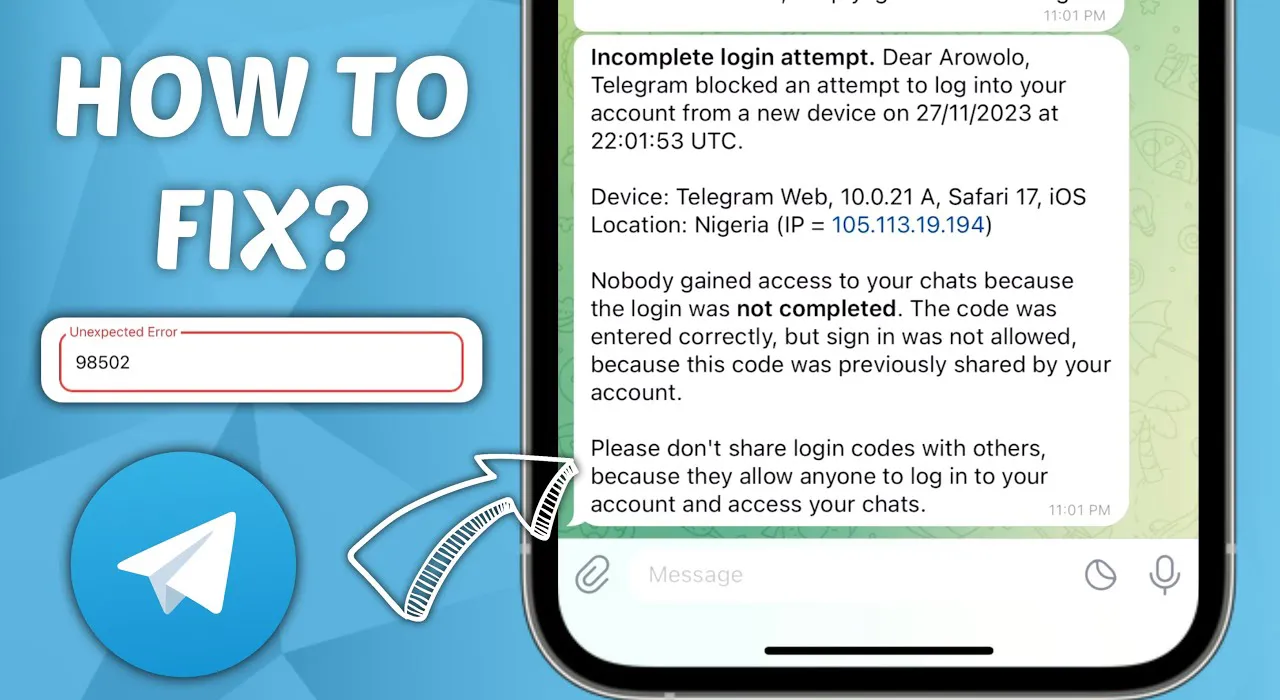
Telegram's login alert feature immediately sends notifications to all logged-in devices when an account is accessed from a new device, including key information such as device type, geographic location, and login time. The core value of this feature is reflected in three aspects: first, real-time risk warning—when an unfamiliar device logs in, users can terminate the session immediately to avoid leakage of chat records, personal information, or associated assets; second, tracking login trajectories—helping users manage multi-device login status and preventing security risks caused by forgetting to log out of public or shared devices; third, assisting in account recovery—if the account is stolen, login alerts can provide clues about the thief's device and location, supporting account retrieval.
2. High-Frequency Applicable Scenarios
- Cross-border office users: Often switch logins across multiple devices such as computers, mobile phones, and tablets, and need to keep track of account access in real time;
- Privacy-sensitive groups: Value the confidentiality of chat content and worry about malicious account login;
- Public device users: Occasionally log in on public devices such as internet cafes or company computers and need to detect abnormal logouts promptly;
- Multi-account managers: Operate multiple Telegram channels or groups and need to monitor account security status in batches.
II. Basic Steps to Set Up Login Alerts After Downloading Telegram (Universal for All Devices)
1. Prereparation: Complete Account Registration and Login
First, download Telegram through official channels . After installation, complete registration using a mobile phone number: enter the mobile number to receive a verification code, set a username and avatar after verification, and complete the basic account setup. Ensure the account is successfully logged in and the network connection is stable to avoid functional loading abnormalities during the setup process.
2. Detailed Operation Process to Enable Login Alerts
(1) Mobile Device (Android/iOS) Setup Steps
- Open the Telegram app, click "Settings" (gear icon) in the lower right corner to enter the settings page;
- Select the "Privacy and Security" option, which is the core entry for all security-related functions;
- Scroll down to find the "Security Notifications" section and toggle on the "New Login Alerts" switch;
- Customize notification methods: Check "Push Notifications" and "In-App Banner" to ensure alerts are received in scenarios such as mobile phone lock screen and app background;
- Optional setting: Enable "Login Location Prompt" to include more detailed geographic location information in notifications, facilitating accurate judgment of login legitimacy.
(2) Desktop (Windows/Mac) Setup Steps
- Open the Telegram desktop client, click the menu button (three horizontal lines icon) in the upper left corner, and select "Settings";
- Click "Privacy and Security" and find the "Security Notifications" option;
- Enable "New Login Alerts", check "Desktop Notifications", and set notification sound and pop-up display duration;
- Link mobile alerts: Ensure the account is logged in synchronously on desktop and mobile devices, and enable "Cross-Device Notification Sync" to realize simultaneous login alert reception across multiple devices and avoid omissions.
(3) Web Version (Telegram Web) Setup Steps
- Log in to the Telegram official website web version , click the three-dot icon in the upper right corner, and select "Settings";
- Enter the "Privacy and Security" page and enable "New Login Alerts";
- Authorize browser notification permissions to allow Telegram to send login alert pop-ups on the web version;
- After saving settings, verify effectiveness through the "Test Notification" function.
3. Trigger Mechanism and Notification Content of Login Alerts
After successful setup, the system will automatically trigger login alerts in the following scenarios:
- First login to the account on a new device (e.g., logging in on a replacement mobile phone or new computer);
- Re-login after clearing cache on the same device;
- Cross-regional login (significant difference between the login IP address and the frequently used address).
- Notification content will include key information: login device model (e.g., iPhone 15, Windows 11 PC), login time (accurate to the minute), geographic location (city-level), and login method (app login/web login), helping users quickly verify the legitimacy of the login behavior.
III. Advanced Security Configurations: Make Login Alerts More Effective (Enhance Account Protection Level)
1. Bind Two-Step Verification for Double Login Security
Two-step verification is an important supplement to login alerts. After enabling it, even if others obtain the verification code, they still need to enter a custom password to log in to the account. The setup steps are as follows:
- Go to "Privacy and Security" > "Two-Step Verification";
- Click "Set Additional Password" to create a complex password containing uppercase and lowercase letters, numbers, and special symbols (it is recommended to be 8 characters or more, such as "Secure@Login2025");
- Add and verify a recovery email, which is the only recovery channel if the two-step verification password is forgotten. Be sure to use a secure and frequently used email;
- Set a password hint (optional, but it is recommended to set a hint that does not directly reveal the password). After completion, two-step verification is officially enabled.
- At this point, logging in on a new device requires double verification: "verification code + two-step verification password". Combined with login alerts, it forms a complete security protection system.
2. Device Management: Regularly Audit Logged-in Devices and Terminate Abnormal Sessions in Time
After setting up login alerts, it is necessary to regularly manage logged-in devices to reduce security risks from the source:
- Go to "Privacy and Security" > "Devices" to view the list of all devices logged into the account, including device name, login time, and last active time;
- Identify unfamiliar devices: Focus on checking whether the device model and login time match personal usage habits. If an unknown device is found, click "Terminate Session" to immediately disconnect its access rights;
- Regular cleaning: It is recommended to audit the device list once a month and log out of devices that have not been used for a long time (such as old mobile phones and public computers) to avoid illegal use of the account.
3. Local Passcode Lock: Device-Level Protection to Prevent Physical Access Leakage
The local passcode lock is used to protect access to the Telegram app on a single device, forming "account-level + device-level" double protection with login alerts:
- Mobile devices: Settings > Privacy and Security > Passcode Lock, set a PIN code or biometric identification (fingerprint/facial recognition);
- Desktop devices: Settings > Privacy and Security > Local Password, set an unlock password, and configure the automatic lock time (e.g., lock after 1 minute of inactivity);
- Functional value: Even if the mobile phone or computer is physically accessed by others, it needs to be unlocked to view chat content, avoiding information leakage when login alerts are ignored.
IV. SEO Optimization Tips: Make Account Security Setup Content More Searchable (Google and Bing Adaptation)
1. Keyword Layout Strategy
- Core keywords: Telegram login alert setup, Telegram account security notification, Telegram two-step verification activation;
- Natural integration of long-tail terms: Naturally embed long-tail terms such as "steps to set up login notifications after downloading Telegram", "how to enable new device login alerts on Telegram", and "Telegram account cross-regional login alert settings" in the article title, subheadings, and main paragraphs. These terms have low competition and high accuracy, making it easier to gain ranking advantages on Google and Bing;
- Keyword density: Control the density of core keywords at 3%-5%, and ensure long-tail terms appear at least once in each main chapter to avoid affecting readability due to over-stuffing.
2. Content Optimization Tips
- Clear step-by-step presentation: Use numbers and bullet points to present the setup process, facilitating users to operate step by step, and improving search engines' friendliness to "practical" content;
- Question-oriented expression: Insert high-frequency user questions in appropriate positions of the main text (such as "What to do if Telegram login alerts are not received?" and "How to set up cross-device login notifications on Telegram") to match Google and Bing search intentions;
- External link configuration: Reasonably insert links to the Telegram official website and two-step verification help center in the article to enhance content authority and assist in search rankings.
V. Common Problems and Troubleshooting (Improve User Experience and Reduce Churn Rate)
1. What to Do If Login Alerts Are Not Received?
- Check notification permissions: On mobile devices, go to Phone Settings > Notifications > Telegram and ensure push notifications are allowed; on desktop devices, check if browser/client notification permissions are enabled;
- Verify account status: Confirm the account is not restricted, the logged-in device has a stable network connection, and try logging out and logging back in to retry;
- Update the app version: Using an old version of Telegram may cause functional abnormalities. Download the latest version from the app store or official website.
2. How to Handle Unfamiliar Login Alerts Urgently?
- Immediately terminate the session: Click "View Devices" in the alert to find the unfamiliar device and terminate the session;
- Modify the two-step verification password: Go to the "Two-Step Verification" page and change to a more complex password;
- Check associated information: Confirm that the mobile phone number and recovery email have not been tampered with. If necessary, contact the Telegram support team to report account abnormalities.
3. How to Disable Unnecessary Login Alerts?
If you need to reduce the frequency of alerts, go to "Privacy and Security" > "Security Notifications", disable "Repeat Login Alerts on the Same Device", and only keep "New Device Login Alerts" to balance security and usability.
VI. Conclusion
Setting up account login alerts after downloading Telegram is a basic and crucial step to ensure account security. Through targeted settings on mobile devices, desktop devices, and web versions, combined with advanced functions such as two-step verification, device management, and local passcode lock, a multi-level security protection system can be built to effectively resist risks such as unauthorized login and account theft. The detailed practical process dismantled in this article takes into account the operability of novice users and the advanced needs of experienced users, and integrates Google and Bing SEO optimization skills to help content accurately reach users in need. Account security is no trivial matter. It is recommended to regularly audit security configurations and update passwords and recovery information after completing login alert setup to make Telegram usage more secure. Whether for individual users or channel operators, mastering these security setup skills can protect digital communication.